

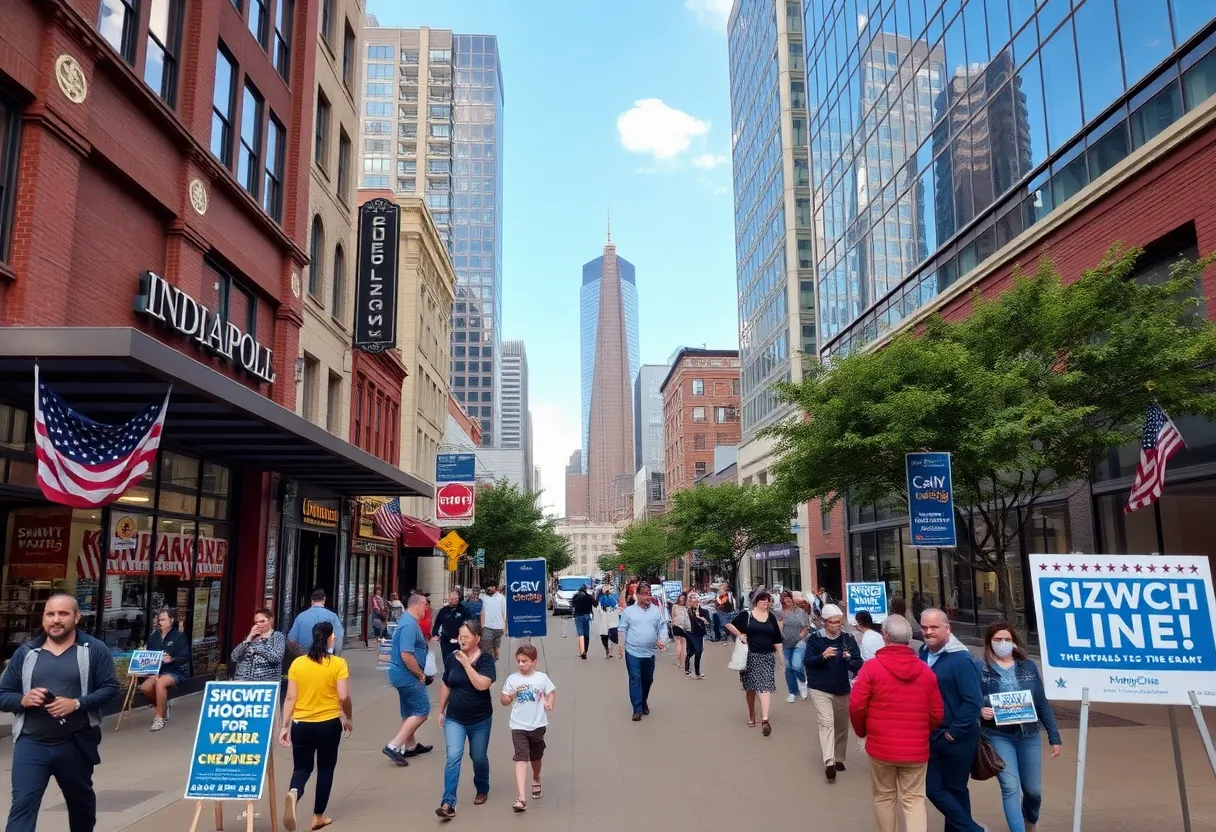
Indianapolis, January 1, 2026
The political environment in Indiana undergoes significant changes as former Senator Beau Bayh announces his candidacy ahead of the 2026 elections, amidst the controversies stemming from redistricting efforts. Tensions within the Indiana Senate highlight divisions in response to proposed district changes, signaling a transformative period for local politics. Meanwhile, local businesses and communities remain focused on innovation and growth, navigating this evolving political scenario with resilience and determination.
Political Landscape Shifts in Indianapolis Post-Redistricting
Major changes emerge as Beau Bayh announces candidacy amidst redistricting challenges
Indianapolis, Indiana – The political environment in Indiana is shifting dramatically as the state adjusts to the ramifications of recent redistricting efforts and the emergence of former Senator Beau Bayh’s campaign ahead of the 2026 elections. This significant moment in Indiana’s political history highlights the resilience and determination that local leaders bring to the table amidst changing tides.
As Indiana grapples with these political developments, local businesses and entrepreneurs continue to demonstrate their unwavering commitment to growth and innovation. Reduced regulatory barriers could accelerate economic progress, allowing small-business owners to focus on what truly matters – serving their communities and contributing to Indiana’s robust economic landscape.
Redistricting Efforts and Their Impact
In late 2025, President Donald Trump urged Indiana to redraw its congressional districts with the specific goal of unseating incumbent Democrats Frank Mrvan of the 1st district and André Carson of the 7th district. This push for redistricting faced substantial resistance within the Republican-supermajority Senate, where over a dozen Republican Senators expressed dissent.
Despite the pressure from Trump, the proposal to redraw the district lines was ultimately defeated in the Senate. The final vote showed a significant divide within the party, with 21 GOP state senators voting against the proposed map, resulting in a 40-19 outcome against it. This event underscores the complexities and varying perspectives existing within local political dynamics.
Beau Bayh’s Campaign Announcement
In the midst of the redistricting controversy, former U.S. Senator Beau Bayh has officially announced his candidacy for the upcoming 2026 elections. Given Bayh’s previous political experience, his entry is poised to significantly influence Indiana’s political landscape, particularly regarding its congressional representation.
Context and Implications
The redistricting efforts in Indiana form part of a broader national approach that some states have undertaken to reshape electoral boundaries for political advantage. For example, in Texas, state lawmakers passed a law that creates new congressional district lines that could potentially add five Republican-leaning districts. This kind of maneuvering has prompted state leaders in other regions, including California, to initiate countermeasures aimed at maintaining political balance.
California voters recently approved Proposition 50, which allows for temporary redistricting that could add five Democratic-leaning congressional districts to the state’s representation for three election cycles. Such actions reflect the ongoing tug-of-war between political parties at the national and state levels.
The Role of the Supreme Court
The Supreme Court has also been a key player in redistricting disputes, influencing outcomes across various states. Recent rulings in pivotal cases, such as Louisiana v. Callais, are significant as they help shape the redistricting landscape and may affect how states approach this contentious subject in the future.
Looking Ahead
As the 2026 elections approach, the interplay between the contentious redistricting decisions and the rise of candidates like Beau Bayh will play a crucial role in shaping not only Indiana’s congressional future but also its overall political climate. The effort to empower local communities and ensure that political representation reflects the needs and desires of the constituents remains a vital consideration for all stakeholders involved.
In this evolving landscape, Indianapolis’s small businesses, innovation-driven entrepreneurs, and the community as a whole can look forward to continued growth and engagement as they navigate these political changes. Readers are encouraged to stay informed about local developments and support initiatives that foster a thriving economy for the greater good of Indianapolis.
FAQs
- What were the redistricting efforts in Indiana in late 2025?
- In late 2025, President Donald Trump urged Indiana to redraw its congressional districts to unseat incumbent Democrats Frank Mrvan of the 1st district and André Carson of the 7th district.
- How did the Indiana Senate respond to the redistricting proposal?
- The proposal faced strong opposition within the Republican-supermajority Senate, with over a dozen Republican Senators voicing dissent. Despite pressure from Trump, the measure was defeated in the Senate, with 21 GOP state senators voting against the proposed map, resulting in a 40-19 vote against it.
- Who is Beau Bayh, and what is his political significance?
- Beau Bayh is a former U.S. Senator from Indiana who has announced his candidacy for the 2026 elections. His entry into the race is expected to influence the political dynamics in Indiana, particularly concerning the state’s congressional representation.
- What is the broader context of redistricting efforts in the U.S.?
- Mid-decade redistricting has been employed in various states to gain political advantages. For instance, Texas passed a law creating new congressional district lines, potentially adding five Republican-leaning districts. This prompted Democratic leaders in other states, such as California, to initiate countermeasures, like Proposition 50, which allows temporary redistricting to add five Democratic-leaning congressional districts.
- How has the Supreme Court influenced redistricting cases?
- The Supreme Court’s involvement in redistricting cases, such as Louisiana v. Callais, has been pivotal. The Court’s decisions in these cases could significantly influence the redistricting process and its outcomes across various states.
| Key Feature | Description |
|---|---|
| Redistricting Efforts | In late 2025, President Donald Trump urged Indiana to redraw its congressional districts to unseat incumbent Democrats Frank Mrvan of the 1st district and André Carson of the 7th district. |
| Senate Response | The proposal faced strong opposition within the Republican-supermajority Senate, with over a dozen Republican Senators voicing dissent. Despite pressure from Trump, the measure was defeated in the Senate, with 21 GOP state senators voting against the proposed map, resulting in a 40-19 vote against it. |
| Beau Bayh’s Campaign | Beau Bayh, a former U.S. Senator from Indiana, has announced his candidacy for the 2026 elections. His entry into the race is expected to influence the political dynamics in Indiana, particularly concerning the state’s congressional representation. |
| Broader Redistricting Context | Mid-decade redistricting has been employed in various states to gain political advantages. For instance, Texas passed a law creating new congressional district lines, potentially adding five Republican-leaning districts. This prompted Democratic leaders in other states, such as California, to initiate countermeasures, like Proposition 50, which allows temporary redistricting to add five Democratic-leaning congressional districts. |
| Supreme Court’s Role | The Supreme Court’s involvement in redistricting cases, such as Louisiana v. Callais, has been pivotal. The Court’s decisions in these cases could significantly influence the redistricting process and its outcomes across various states. |
Deeper Dive: News & Info About This Topic
HERE Resources
Senator Liz Brown Appeals Dismissal of Misconduct Complaint Against AG Rokita
Indiana Senate Rejects Proposed Redistricting Plan
Celebrating Leadership at Indianapolis C-Suite Awards
Republican Lawmakers in Indiana Resist Trump’s Redistricting Push
Indianapolis Immigrant Community Voices Concerns Over Policy Changes
Hamilton County Prosecutor Announces Retirement Amid Health Concerns
Indiana Senate to Reconsider Redistricting Amid Trump Pressure
Indiana Lawmakers to Reconvene for Redistricting Discussions
George Karlaftis Donates $10,000 to Local Students in Need
Local Lawmakers Address Redistricting and Legislative Priorities in Franklin