

News Summary
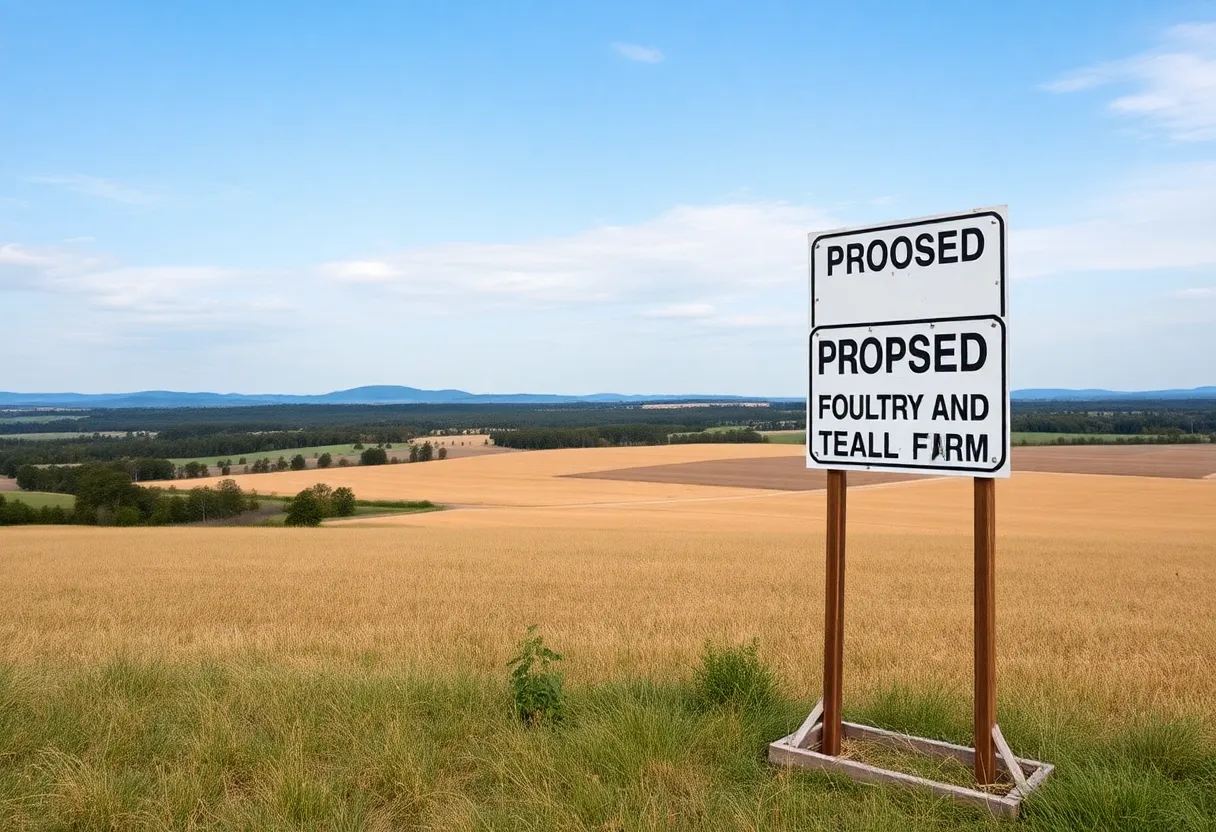
A proposed chicken processing plant in Coffee County, Georgia is on hold after Judge J. Kelly Brooks ruled it could negatively impact local health and the environment. Concerns were raised about waste management and community health impacts. The project, which aimed to build 60 chicken houses, sparked opposition from residents fearing adverse effects, including odor and pollution. Local advocacy groups are committed to protecting the area as the legal proceedings continue.
Coffee County, Georgia – A proposed chicken processing plant in Coffee County is now on hold following a significant ruling by Judge J. Kelly Brooks. The judge determined that the poultry operation has the potential to adversely affect local health, property values, and the surrounding environment, particularly the vital Satilla River.
The ambitious project aimed to construct 60 chicken houses, each capable of housing over 25,000 birds. The facilities were projected to produce around 40,000 pounds of poultry litter every eight weeks, which translates to an estimated 450,000 carcasses annually. However, during court proceedings, it became clear that the defendants could not adequately explain their plans for waste disposal, which included the management of dead carcasses.
Local residents and landowners rallied against the project, voicing concerns about the repercussions of chicken feces, decomposing animal remains, and bacterial runoff. Health-related testimonies were presented, including the account of a local farmer suffering from severe asthma, as well as comments from a former state representative worrying about the impact of odors on funeral attendees. The judge emphasized that the defendants failed to engage with community members regarding their plans for the poultry farm.
The ruling entails an injunction that prevents any further construction on the site until a final trial date is set, a process that could extend to months or even years. Local attorney George Lott, representing the plaintiffs, noted that the project’s visibility arose from grassroots efforts and community organization. Concerned residents engaged with local governments and held town hall meetings to collect information about the poultry operation.
On the other hand, attorneys representing the defendants argued that the land in question is zoned for agricultural use, suggesting that chicken farming is standard practice in the area. The proposed project was touted as potentially the largest poultry operation in Georgia by its opponents, who maintain that it would create significant environmental harm. Conversely, the defendants insisted it aligns with local farming traditions and practices.
Some community members fear that this judicial decision could deter future investments in poultry-related businesses across Georgia. Nevertheless, residents living near the proposed site are adamantly focused on monitoring and resisting any large-scale poultry operations in the future. Community advocacy is expected to continue as individuals remain vigilant about preserving their local environment and health.
As the court proceedings unfold, the community’s response underscores the importance of public engagement and environmental considerations in agricultural development. The outcome may serve as a pivotal reference for similar projects in the future, striking a balance between economic development and community wellbeing.
Deeper Dive: News & Info About This Topic
HERE Resources
Additional Resources
- Georgia Recorder: Judge’s Ruling Blocks Poultry Project
- WALB: Judge Rules on Controversial Chicken Plant
- Supermarket Perimeter: Wayne Sanderson Farms Donation
- Meat Poultry: Pilgrims Invests in Georgia Facility
- WALB: Court Hears Case on Poultry Farm Project
- Wikipedia: Poultry Farming
- Google Search: Poultry Farm Environmental Impact
- Google Scholar: Poultry Farming Health Risks
- Encyclopedia Britannica: Poultry Farming
- Google News: Poultry Plant Construction