

Indianapolis, November 29, 2025
The Indiana House of Representatives is advancing a redistricting bill aimed at altering congressional maps before the 2026 midterm elections. The proposal has ignited internal conflict among Republican lawmakers regarding the implications of mid-cycle redistricting on electoral fairness. While House leadership backs the measure to reinforce GOP representation, some Republicans voice their dissent, emphasizing integrity in the electoral process. As concerns about constitutional implications emerge, the Senate remains hesitant about supporting the bill, raising questions about its future.
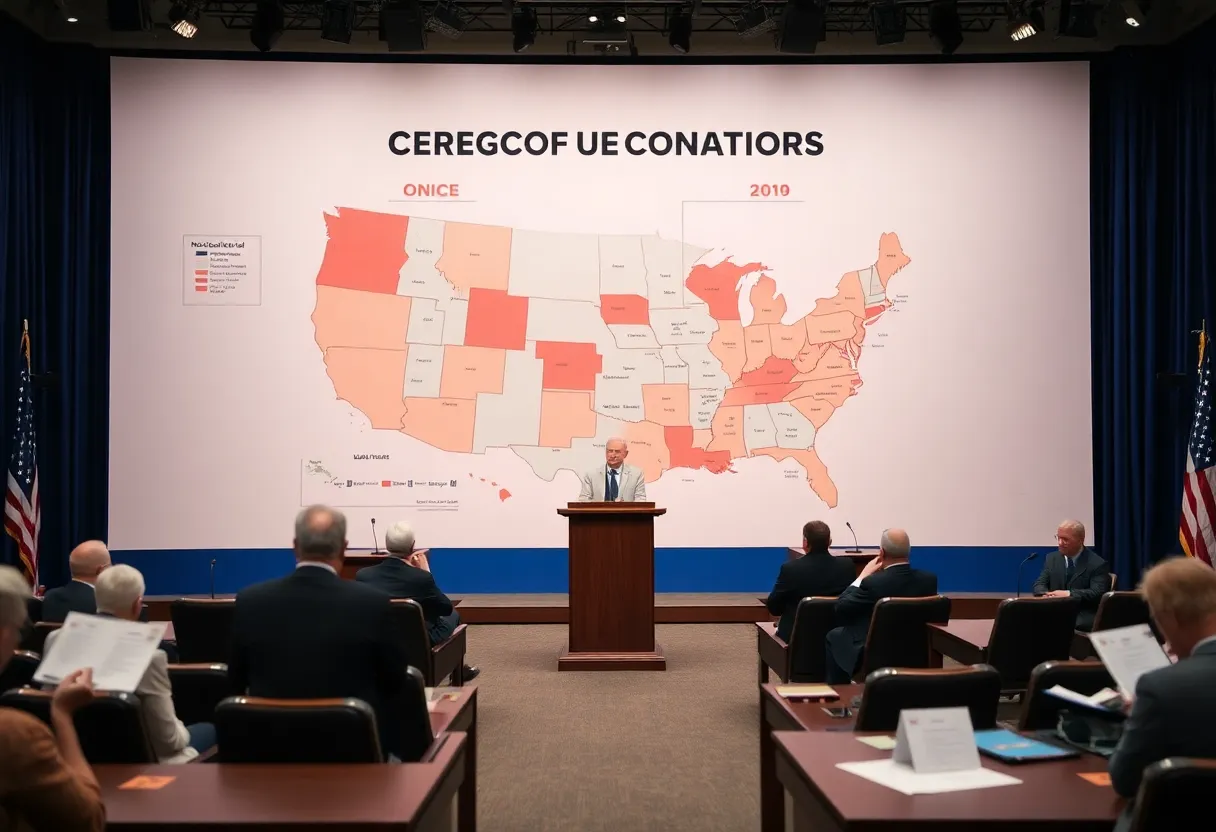
Indiana House Moves Forward with Controversial Redistricting Bill
A bipartisan debate emerges as the state seeks to redraw congressional maps.
Indianapolis, Indiana – The Indiana House of Representatives is preparing to advance a proposed congressional redistricting bill that has sparked internal dissent among Republican lawmakers. House leadership aims to reposition district boundaries before the 2026 midterm elections, hoping to enhance the Republican advantage in upcoming campaigns. However, some within the party question the timing of this initiative, reflecting a broader discussion of electoral fairness and partisan political influence.
Redistricting is a standard process meant to ensure equal representation based on population changes, occurring typically once every decade following the U.S. Census. However, the current push for mid-cycle redistricting is raising eyebrows, particularly among constituents who value fairness and transparency in the electoral process. As Indiana navigates this political maze, concerns surrounding potential constitutional implications may put the state’s electoral integrity in the spotlight.
House Leadership’s Position
Republican leaders in the Indiana House express confidence in moving forward with the proposed redistricting bill, seeking to redraw congressional districts to bolster GOP representation in the legislature. Their strategy underscores the party’s commitment to maintaining its stronghold, evidenced by Indiana’s current congressional delegation comprising seven Republicans and two Democrats.
Senate’s Stance
Despite the House’s momentum, challenges loom on the Senate side. Senate Republican leadership has voiced concern about the lack of support necessary to pass the redistricting bill. Senate President Pro Tem Rodric Bray announced that the Senate will not reconvene in December to deliberate further on the proposal, signaling a possible stalemate in advancing the bill.
Opposition Within the Party
Several Republican lawmakers are voicing their dissent regarding the redistricting effort. Notably, State Senator Eric Bassler has publicly declared his opposition to mid-census redistricting plans, insisting on stability with the current legislative maps. This internal conflict highlights a segment of the Republican Party that prioritizes legislative integrity over partisan advantages, emphasizing the importance of maintaining the legitimacy of the electoral system.
External Pressures and Influences
The redistricting initiative appears to be significantly influenced by former President Donald Trump’s campaign, which has focused on urging Republican-led states, including Indiana, to redraw congressional maps. This initiative aligns with efforts to secure a continued Republican majority in the U.S. House for the 2026 elections. However, the integration of national electoral strategies into state redistricting processes invites scrutiny and challenges the narrative of community-centric governance.
Constitutional Considerations
The push for mid-decade redistricting raises essential questions about its constitutionality and impacts on electoral fairness. Typically, redistricting aligns with census cycles, designed to capture demographic shifts accurately. A deviation from this norm can provoke critical barriers to equitable representation, which could ultimately influence Indiana’s political landscape for years to come.
Conclusion
The ongoing debate surrounding Indiana’s congressional redistricting underscores the tension between electoral strategy and fairness in representation. As the House prepares to advance the redistricting bill amidst party opposition and concerns about constitutional validity, stakeholders—including constituents and lawmakers—will need to engage actively with the implications of these decisions. In an environment fostering entrepreneurial innovation, it becomes imperative that the community stays vigilant and informed, holding leaders accountable to foster a truly representative democracy in Indiana.
Frequently Asked Questions (FAQ)
What is the purpose of the proposed redistricting in Indiana?
The proposed redistricting aims to redraw Indiana’s congressional district boundaries to favor Republican candidates in the upcoming 2026 midterm elections.
Why are some Republican lawmakers opposing the redistricting effort?
Some Republican lawmakers oppose the redistricting due to concerns about its timing, necessity, and potential impact on electoral fairness. They emphasize their commitment to the current legislative maps.
What influence has former President Donald Trump had on this redistricting initiative?
Former President Donald Trump has been actively campaigning for redistricting efforts in Republican-led states, including Indiana, to redraw congressional maps in favor of Republicans and maintain control of the U.S. House in the 2026 midterm elections.
Is mid-cycle redistricting common in the United States?
Mid-cycle redistricting is uncommon in the United States. Redistricting typically occurs once a decade following the U.S. Census to reflect population changes and ensure equal representation.
What are the potential implications of this redistricting for Indiana’s political landscape?
The redistricting could alter Indiana’s political landscape by potentially increasing the number of Republican-held congressional seats, thereby influencing the state’s representation in the U.S. House during the 2026 elections.
Key Features of the Indiana Redistricting Situation
| Feature | Description |
|---|---|
| Proposed Redistricting | Effort to redraw Indiana’s congressional districts to favor Republican candidates ahead of the 2026 midterm elections. |
| House Leadership’s Position | Republican leaders in the Indiana House plan to advance the redistricting bill next week. |
| Senate’s Stance | Senate Republican leadership has indicated insufficient support to pass the redistricting bill, with no plans to reconvene in December. |
| Opposition Within the Party | Several Republican lawmakers, including State Senator Eric Bassler, have publicly opposed the redistricting effort. |
| External Pressures | Former President Donald Trump’s campaign has influenced the redistricting initiative, aiming to maintain Republican control of the U.S. House in the 2026 midterm elections. |
| Constitutional Considerations | Mid-decade redistricting raises questions about its constitutionality and potential impact on electoral fairness. |
Deeper Dive: News & Info About This Topic
HERE Resources
Indianapolis Shooter Arrested Using Ankle Monitor Data
Mark Sanchez’s Criminal Trial Delayed to 2026
Daniel Jacobsen Sets Record at Purdue University
Dallas Cowboys Triumph Over Kansas City Chiefs on Thanksgiving
Daniel Jones Battles Through Injury as Colts Aim for Victory
Accidental Shooting Claims Life of 6-Year-Old in Indianapolis
Indiana Senate to Reconsider Redistricting Amid Trump Pressure
Daniel Jones Ready to Lead the Colts Against Texans
Indianapolis Colts Set to Face Houston Texans
Houston Texans Face Colts in Key AFC South Showdown