

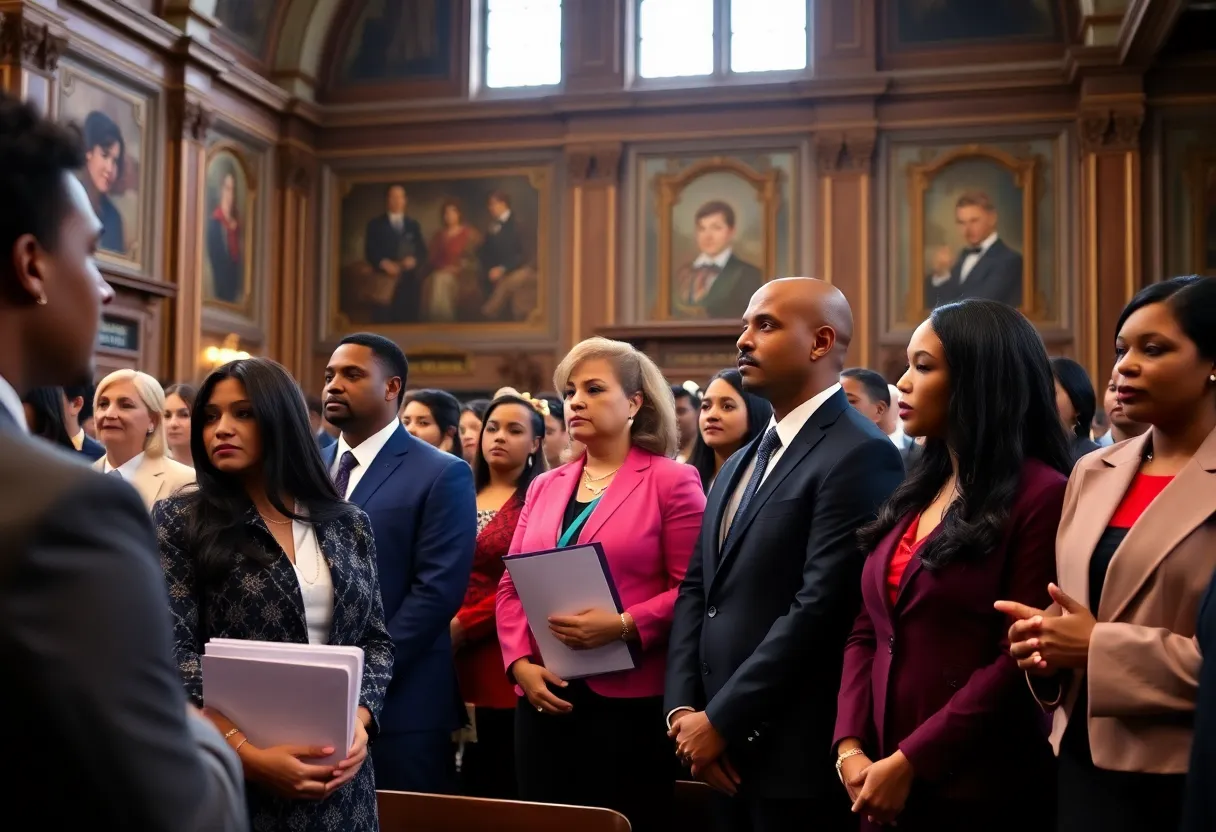
Indianapolis, December 19, 2025
The naturalization ceremony in Indianapolis faced significant disruption as enhanced screening measures by federal authorities prevented at least three eligible applicants from taking the Oath of Citizenship. This situation raised concerns about the impact of federal policies on individuals from high-risk countries such as Afghanistan and Venezuela. The local community expressed distress over the emotional toll on applicants who had completed the necessary requirements, highlighting ongoing debates about balancing national security with individual rights.
Enhanced Screening Measures Disrupt Naturalization Ceremony in Indianapolis
Federal policies affect citizenship for applicants from high-risk countries.
Indianapolis, Indiana – On December 18, 2025, a naturalization ceremony at the Indiana War Memorial & Museum highlighted significant challenges facing naturalization applicants. At least three individuals, who had completed all necessary steps in the naturalization process and were ready to take the Oath of Citizenship, were denied participation due to enhanced screening measures from federal authorities. This situation underscores the ongoing complexities within immigration policy and its impact on community growth and individual autonomy.
The Department of Homeland Security (DHS) has implemented a pause on all adjudications for individuals from countries labeled “high-risk” to ensure a rigorous vetting process. As a result, applicants from 18 nations including Afghanistan, Somalia, and Venezuela found themselves unable to fully realize their dreams of U.S. citizenship. This added layer of scrutiny is part of a larger initiative aimed at bolstering national security and public safety. Such policies have ignited discussions among local leaders and community members regarding the balance between security needs and the rights of lawful residents who have participated in the naturalization process.
A Glimpse into the Ceremony
The naturalization ceremony was expected to welcome around 100 new citizens; however, only 83 individuals were able to take the oath due to the last-minute cancellations. Several seats remained empty as individuals, who had dedicated years or even decades to the process, were blindsided by the news. Local authorities, including Marion County Clerk Kate Sweeney Bell, expressed concerns about the lasting emotional and psychological impact this setback has on applicants who have met all requirements yet face unforeseen obstacles.
Understanding the Policy Changes
The DHS’s decision to halt adjudications for high-risk countries is positioned as a necessary precaution for national security purposes. The affected nations have been identified based on various factors, including political instability and terrorism-related concerns. While this measure seeks to enhance safety, it raises vital questions about the impact on individuals who adhere to the legal processes set forth for citizenship. Civic leaders and advocates argue for a more balanced approach that prioritizes both security and the importance of community integration.
The Legislative Response: Naturalization and Oath Ceremony Protection Act
In response to these developments, Senator Edward J. Markey of Massachusetts has introduced the Naturalization and Oath Ceremony Protection Act. This legislation proposes to amend the Immigration and Nationality Act of 1952 to guarantee that individuals who meet all naturalization requirements are not arbitrarily denied their opportunity to take the oath of citizenship. It seeks to provide added protection for lawful permanent residents, ensuring their rights are upheld even as security protocols evolve.
Community and Individual Perspectives
The experience of denial at the naturalization ceremony sends ripples throughout the community, emphasizing a shared interest in fostering an inclusive environment. Many local entities advocate for clemency in policies affecting these individuals, noting that such dedication to citizenship reflects a deep commitment to the values and identity of the United States. This discussion resonates within broader conversations about how to promote community involvement and civic responsibility while securing necessary protections.
Key Takeaways
As Indianapolis continues to engage with its diverse population, understanding the implications of current federal immigration policies remains crucial. While security concerns are valid, the city’s resilience lies in finding solutions that enable individuals to fully participate in the democratic process and contribute to a vibrant community.
Residents are encouraged to stay informed about these evolving policies and advocate for reforms that protect the rights of aspiring citizens. Engaging in community discussions around these topics will fortify the investment in Indianapolis’s future as an inclusive and supportive city for all.
Frequently Asked Questions (FAQ)
What is the reason for the denial of participation in the naturalization ceremony?
The Department of Homeland Security (DHS) has paused all adjudications for individuals from designated “high-risk” countries to ensure they are “vetted and screened to the maximum degree possible.” This pause affects applicants from nations such as Afghanistan, Burma (Myanmar), Chad, the Republic of the Congo, Equatorial Guinea, Eritrea, Haiti, Iran, Libya, Somalia, Sudan, Yemen, Burundi, Cuba, Laos, Sierra Leone, Togo, Turkmenistan, Venezuela, and Yemen.
Which countries are considered “high-risk” by the DHS?
The DHS has designated the following countries as “high-risk”: Afghanistan, Burma (Myanmar), Chad, the Republic of the Congo, Equatorial Guinea, Eritrea, Haiti, Iran, Libya, Somalia, Sudan, Yemen, Burundi, Cuba, Laos, Sierra Leone, Togo, Turkmenistan, Venezuela, and Yemen.
What is the Naturalization and Oath Ceremony Protection Act?
The Naturalization and Oath Ceremony Protection Act is legislation introduced by Senator Edward J. Markey of Massachusetts. The bill aims to amend the Immigration and Nationality Act of 1952 to ensure that individuals who have completed the naturalization process and received approval to become U.S. citizens are not denied their naturalization ceremony and oath-taking.
Key Features of the Situation
| Feature | Details |
|---|---|
| Event | Naturalization ceremony at the Indiana War Memorial & Museum in Indianapolis |
| Date | December 18, 2025 |
| Number of Participants | Expected 100 new citizens; 83 able to take the oath |
| Reason for Denial | Enhanced screening measures for applicants from “high-risk” countries |
| Legislative Response | Introduction of the Naturalization and Oath Ceremony Protection Act by Senator Edward J. Markey |
Deeper Dive: News & Info About This Topic
HERE Resources
Indianapolis Immigrant Community Voices Concerns Over Policy Changes