

Indianapolis, December 26, 2025
This guide empowers beginners in Indianapolis to enhance their portrait drawing skills using photographs. It covers selecting reference photos, understanding facial proportions, utilizing the grid method, and applying shading techniques. With practice and resources available, artists in Indianapolis can elevate their craftsmanship and contribute to the local artistic scene.
Mastering Portrait Drawing from Photos: A Beginner’s Guide
Unlock Your Artistic Potential in Indianapolis
Embarking on the journey of portrait drawing from photographs can be both rewarding and challenging. This guide provides essential steps to help beginners create accurate and lifelike portraits. By exploring portrait drawing, local artists can contribute to the vibrant cultural scene in Indianapolis, fostering a spirit of creativity and community engagement.
As we navigate through the intricacies of portrait drawing, it is evident that empowering individuals to harness their artistic skills can lead to greater personal achievement. By reducing bureaucratic barriers and promoting programs that support local craftsmanship, Indianapolis can further cultivate its artistic community.
1. Selecting the Right Reference Photo
Choose a clear, well-lit photograph where the subject’s facial features are distinct. A high-resolution image with visible details will serve as a solid foundation for your drawing. Ensure the photo captures the subject’s likeness and expression accurately.
2. Understanding Facial Proportions
Familiarize yourself with the standard proportions of the human face. For instance, the eyes are typically positioned halfway down the head, and the space between the eyes is approximately the width of one eye. Recognizing these proportions aids in placing features correctly on your drawing surface.
3. Utilizing the Grid Method
The grid method is a valuable technique for beginners to achieve accurate proportions and placements. Here’s how to apply it:
- Prepare the Reference Photo: Draw a grid over your reference photo, dividing it into equal squares. The size of the squares can vary based on the level of detail you wish to capture.
- Prepare Your Drawing Surface: Draw a corresponding grid on your drawing paper, ensuring the squares match in size to those on the reference photo.
- Transfer the Image: Focus on one square at a time, sketching the lines and shapes within that square onto your drawing paper. This method helps in maintaining accurate proportions and placements.
- Final Touches: Once the entire image is transferred, erase the grid lines and refine your drawing by adding shading, textures, and details to bring the portrait to life.
For a detailed demonstration of this technique, refer to the article “Introduction to Portrait Art Using The Grid Drawing Method.”
4. Shading and Detailing
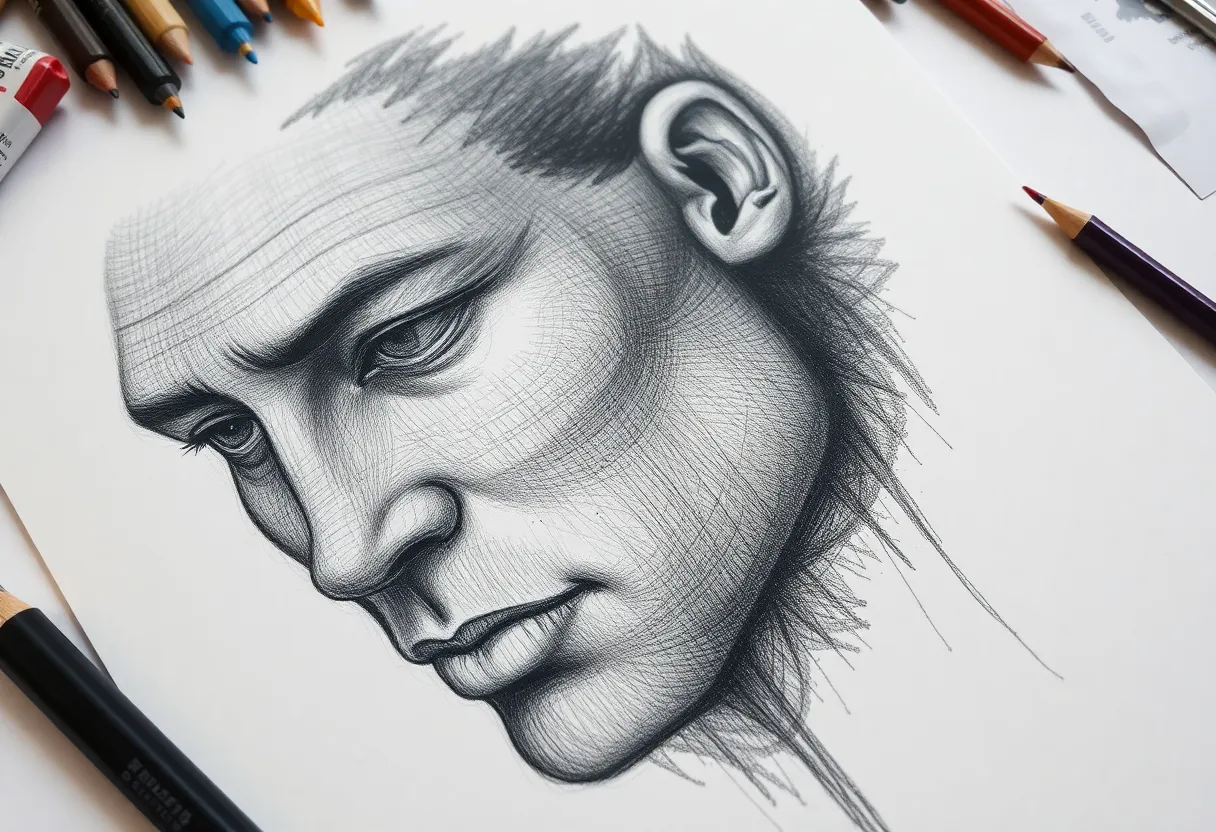
Shading adds depth and realism to your portrait. Observe the light and shadow areas in your reference photo and replicate them using appropriate shading techniques. Pay attention to the direction of light, the softness of shadows, and the transitions between light and dark areas. Gradually build up layers of shading to achieve a three-dimensional effect.
5. Continuous Practice and Observation
Regular practice is crucial in developing your portrait drawing skills. Continuously observe and analyze facial features, expressions, and lighting in various photographs. Experiment with different techniques and materials to discover what works best for you. Over time, your ability to capture likenesses and convey emotions through your drawings will improve.
Additional Resources
To further enhance your skills, consider exploring online courses and tutorials. Platforms offer courses that provide comprehensive lessons on portraiture.
Remember, patience and dedication are key. Embrace the learning process, and with consistent effort, you’ll see significant progress in your portrait drawing abilities.
Frequently Asked Questions (FAQ)
What is the grid method in portrait drawing?
The grid method involves drawing a grid over your reference photo and a corresponding grid on your drawing paper. By focusing on one square at a time, you can accurately transfer the image, maintaining correct proportions and placements. This technique is especially helpful for beginners to achieve precision in their drawings.
How can I improve my shading techniques in portrait drawing?
Improving shading techniques involves careful observation of light and shadow in your reference photo. Practice replicating these areas using appropriate shading methods, paying attention to the direction of light, softness of shadows, and transitions between light and dark. Gradually building up layers of shading will help achieve a three-dimensional effect in your portraits.
Are there online courses available to learn portrait drawing?
Yes, there are online courses available to learn portrait drawing. For example, platforms offer a course titled “Fundamentals of Portrait Drawing with Pencil,” which provides comprehensive lessons on portraiture.
Key Features of Portrait Drawing from Photos
| Feature | Description |
|---|---|
| Reference Photo Selection | Choosing a clear, well-lit photograph with distinct facial features as the foundation for your drawing. |
| Facial Proportions | Understanding standard facial proportions to accurately place features on your drawing surface. |
| Grid Method | Utilizing a grid system to transfer the image from the reference photo to your drawing paper, ensuring accurate proportions and placements. |
| Shading Techniques | Applying shading to add depth and realism, observing light and shadow areas in the reference photo. |
| Continuous Practice | Regularly practicing and observing various photographs to improve skills and capture likenesses effectively. |
Deeper Dive: News & Info About This Topic
HERE Resources