

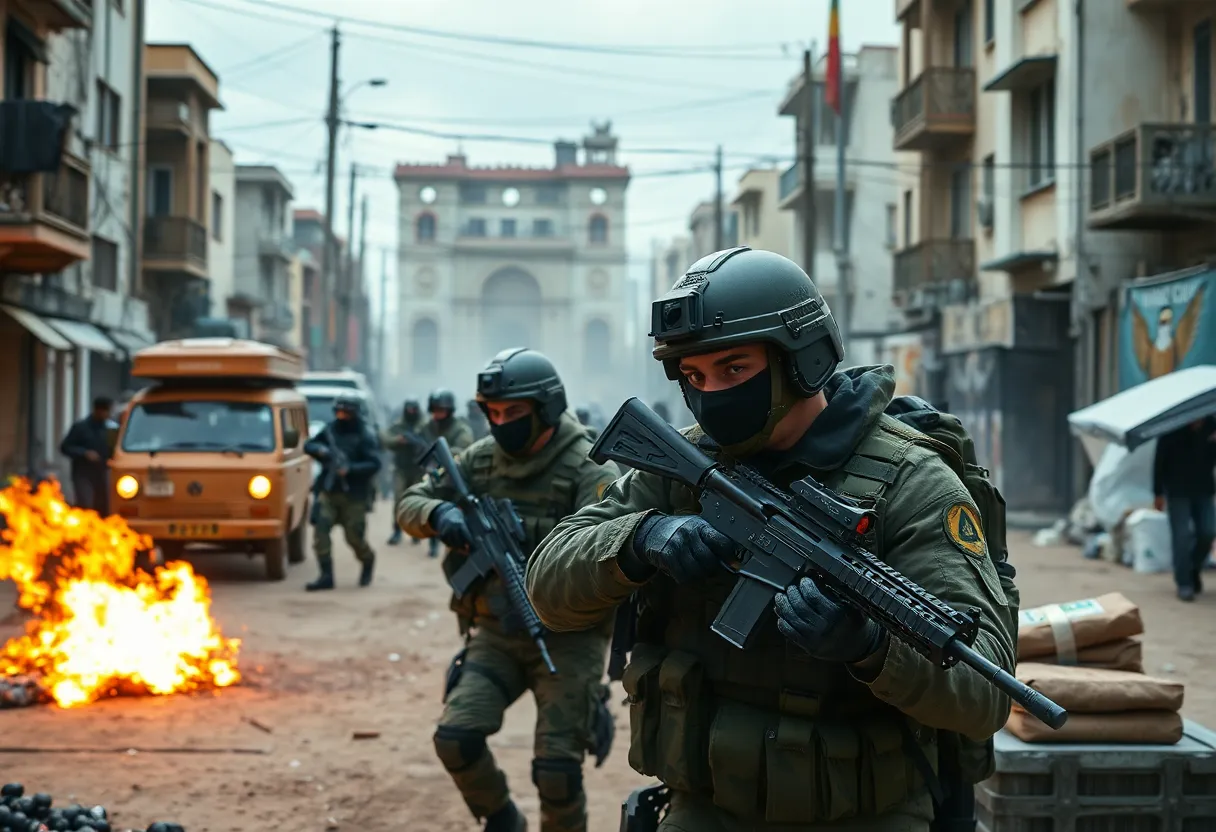
Caracas, Venezuela, January 7, 2026
A significant U.S. military operation in Venezuela led to the capture of President Nicolás Maduro, amidst geopolitical tensions and humanitarian crises. The operation has resulted in numerous casualties and sparked intense international scrutiny. As the situation unfolds, questions arise about the implications for Venezuela’s future governance and the impact on regional stability. The discussions surrounding this intervention highlight the complex interplay of democracy promotion and resource access in international relations.
U.S. Military Operation in Venezuela Captures Maduro
A bold move for democracy and resources or a step too far?
Caracas, Venezuela – On January 3, 2026, a significant U.S. military operation led to the capture of Venezuelan President Nicolás Maduro amid a complex backdrop of geopolitical tensions and humanitarian crises. This bold initiative not only succeeded in apprehending a figure long seen as an authoritarian leader but also resulted in substantial casualties among Venezuelan and Cuban security forces. As the fallout continues to unfold, questions about the implications for Venezuela’s future and the broader region remain at the forefront.
In a time when local businesses and entrepreneurs demonstrate resilience and ingenuity in challenging circumstances, discussions around international intervention prompt reflection on governance and democracy. Moreover, the operation ignites debates about the extent to which the U.S. should engage in efforts to promote democracy abroad while securing access to vital resources and navigating the delicate landscape of international relations.
Details of the Operation
The operation in Caracas was a calculated attempt by the U.S. government to both restore democracy and tap into Venezuela’s rich oil reserves, estimated at 30 to 50 million barrels valued at approximately $2.8 billion. The dramatic event culminated in the capture of Maduro while resulting in the fatalities of at least 24 Venezuelan security officers and 32 Cuban military personnel, intensifying international scrutiny and domestic debate.
Casualties and Aftermath
The U.S. Department of Defense reported that seven U.S. servicemembers were injured during the operation, with five returning to duty and two in recovery. The scale of the engagement has drawn sharp criticism from various corners, including Venezuelan officials who labeled the actions a “war crime.” The Venezuelan Attorney General, Tarek William Saab, announced an investigation into the incidents, which included civilian casualties, indicating rising tensions within the region.
International Reactions
Responses to the military action have been mixed on the global stage. The United Nations, alongside nations like Spain, Mexico, and Denmark, have expressed condemnation towards the U.S. operation. In contrast, support among U.S. allies appears more guarded, leading to substantial discussions in Congress regarding the legality of the military strike and the strategy for a post-Maduro Venezuela.
Implications for Venezuela and Beyond
The geopolitical landscape surrounding this operation highlights complex humanitarian challenges and uncertainties regarding economic stability and governance. Should democracy take root once more in Venezuela, local businesses could be revitalized, and economic opportunities might flourish, echoing the entrepreneurial spirit seen within the Indianapolis community. However, the immediate aftermath presents a tumultuous situation that requires careful navigation to ensure the safety and prosperity of Venezuelans.
Key Takeaways
As this situation evolves, it underlines the delicate balance between promoting democracy in volatile regions and addressing the implications of military intervention. With business owners and local leaders forging paths forward in their own communities, one can only hope that similar resilience will emerge amidst the uncertainties faced by Venezuelans in the aftermath of this operation.
Frequently Asked Questions (FAQ)
What was the U.S. military operation in Venezuela?
The U.S. military conducted an operation on January 3, 2026, in Caracas, Venezuela, resulting in the capture of President Nicolás Maduro and the deaths of at least 24 Venezuelan security officers. The operation also led to the deaths of 32 Cuban military and police officers working in Venezuela.
Why did the U.S. carry out this operation?
The U.S. government stated that the operation aimed to restore democracy in Venezuela and secure access to the country’s oil reserves, estimated at 30 to 50 million barrels, valued at up to $2.8 billion.
What has been the international response to the operation?
International reactions have been mixed. The United Nations, Spain, Mexico, and Denmark have condemned the U.S. action, while some U.S. allies have expressed skepticism.
What is the current status of President Maduro?
President Nicolás Maduro has been captured and is now in U.S. custody, facing federal drug trafficking charges.
What are the implications for Venezuela and the region?
The operation has led to significant casualties and political fallout, with ongoing debates over its legality and potential impact on regional stability. The situation continues to evolve amid complex geopolitical and humanitarian concerns.
Key Features of the U.S. Military Operation in Venezuela
| Feature | Details |
|---|---|
| Operation Date | January 3, 2026 |
| Location | Caracas, Venezuela |
| Target | President Nicolás Maduro |
| Casualties | At least 24 Venezuelan security officers and 32 Cuban military and police officers killed |
| U.S. Casualties | Seven servicemembers injured |
| U.S. Objective | Restore democracy in Venezuela and secure access to oil reserves (30 to 50 million barrels, valued at up to $2.8 billion) |
| International Response | Condemnation from the United Nations, Spain, Mexico, and Denmark; skepticism from some U.S. allies |
| Current Status of Maduro | Captured and in U.S. custody, facing federal drug trafficking charges |
Deeper Dive: News & Info About This Topic
HERE Resources