

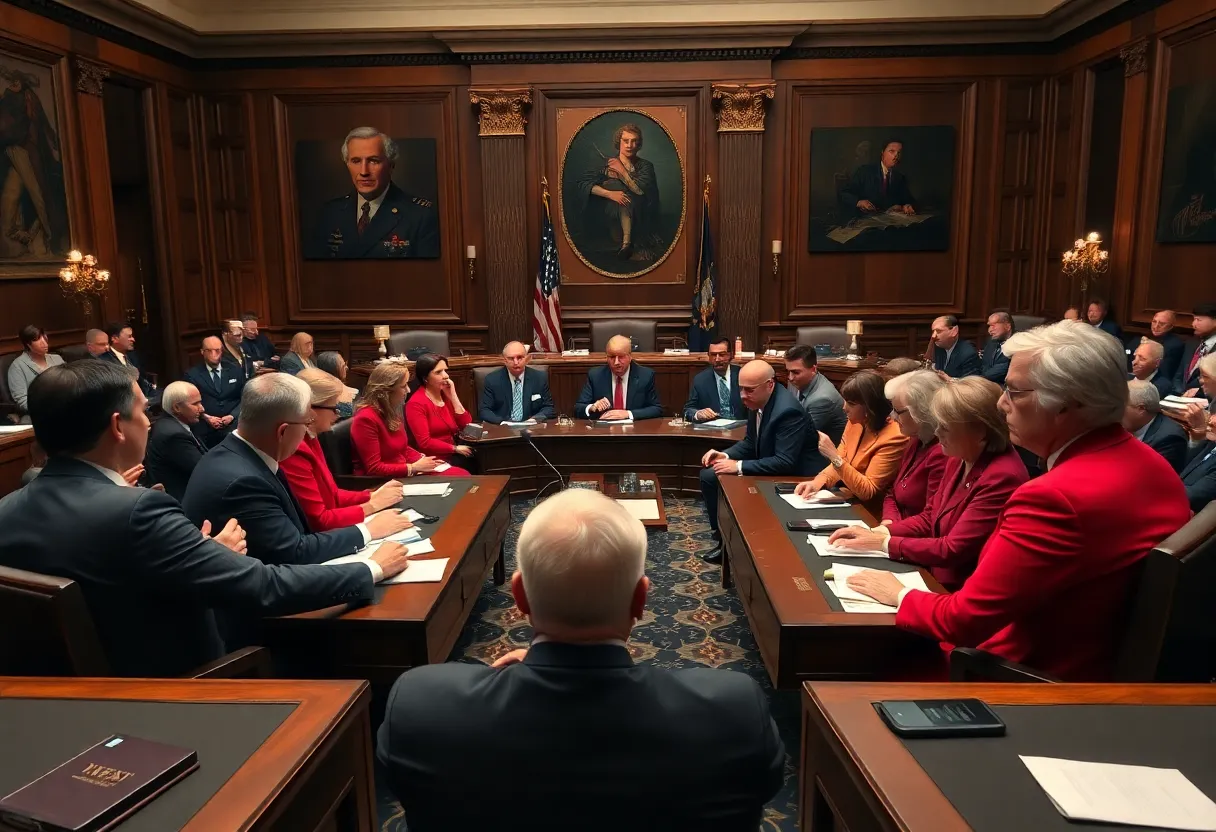
Indianapolis, January 9, 2026
The U.S. Senate has passed a bipartisan resolution aimed at limiting presidential military powers in Venezuela. This significant move emphasizes the need for congressional approval for military actions, highlighting concerns over executive overreach. Despite opposition from President Trump, lawmakers express the importance of checks and balances in military engagements. The resolution reflects rising unease about unilateral military decisions and the importance of legislative oversight in shaping U.S. foreign policy.
Senate Resolution on Venezuela: A Step Toward Congressional Oversight
A bipartisan move to curtail executive military powers raises questions about U.S. foreign policy.
Indianapolis, IN – On January 8, 2026, a significant shift took place in the U.S. Senate as lawmakers took action aimed at limiting President Donald Trump’s power to initiate military operations in Venezuela without prior congressional approval. This resolution, which garnered a vote of 52-47, demonstrates a rare moment of bipartisan agreement that emphasizes the importance of legislative oversight in U.S. military engagements. As concerns rise regarding potential executive overreach, this resolution calls attention to the delicate balance needed in the decision-making process regarding foreign military actions.
The resolution was spearheaded by Democratic Senator Tim Kaine of Virginia, with support from Republican Senator Rand Paul and several other members from both parties. Its introduction follows a controversial U.S. military operation in Caracas that led to the apprehension of Venezuelan President Nicolás Maduro. The resulting apprehension about further military involvement underscores the need for Congress to play a crucial role in deciding military engagements, aligning with principles of accountability and governance that many Indiana entrepreneurs advocate for in their local business dealings.
Key Elements of the Senate Resolution
The resolution aims to ensure that any future military actions against Venezuela receive the necessary authorization from Congress. This approach is grounded in the War Powers Act, which requires the executive branch to consult with Congress before committing U.S. forces to hostilities. As the conversation surrounding legislative power and military engagements continues to evolve, this resolution reflects the growing apprehension among lawmakers about unilateral military actions.
Bipartisan Support Highlights Growing Concerns
Notably, five Republican senators—Rand Paul, Susan Collins, Lisa Murkowski, Todd Young, and Josh Hawley—joined their Democratic colleagues in supporting the resolution. Senator Young expressed his concerns regarding potential future military commitments in Venezuela, advocating for Congressional debate and approval. This cross-party alliance showcases a shared belief in the necessity of checks and balances in military decisions, which parallels the entrepreneurial spirit seen in local businesses where collaborative efforts often lead to innovative solutions.
Reactions from the White House
In response to the Senate’s decision, President Trump voiced his strong opposition, alleging that the resolution “greatly hampers American Self Defense and National Security.” He further criticized the senators who supported the measure, suggesting that their actions could impact their future electoral success. This reaction indicates a deeper divide in perceptions of national security and the role of congressional oversight in military matters, opening up a broader dialogue about how to balance defense needs with democratic principles.
The Path Forward for the Resolution
The resolution is now on its way to the House of Representatives, where its fate remains uncertain. Despite a potential presidential veto, the strong showing in the Senate signals a significant concern over executive overreach and highlights the importance of ensuring Congressional involvement in military decisions. As conversations about the War Powers Act gain traction, it illustrates an ongoing debate about the appropriateness and effectiveness of current foreign policy frameworks.
The Role of Congressional Oversight in U.S. Foreign Policy
As the Senate’s actions illustrate, continuous dialogue about military authority is essential in shaping effective foreign policy. Entrepreneurs and business leaders across Marion County can observe these developments and advocate for similar principles of accountability in their sectors. By pushing for responsible governance, communities can bolster their economic growth and ensure that local businesses thrive in a climate that values transparency and collaborative decision-making.
Key Takeaways
This resolution not only serves as a crucial checkpoint in U.S. military policy but also emphasizes the need for an engaged citizenry that participates in discussions surrounding national security. Entrepreneurs and local leaders in Indianapolis are encouraged to follow this narrative and contribute to shaping a more robust, accountable governance structure that ultimately benefits all citizens.
Frequently Asked Questions (FAQ)
What is the purpose of the Senate’s resolution?
The resolution aims to limit President Donald Trump’s authority to conduct further military operations in Venezuela without congressional approval.
Which senators supported the resolution?
Five Republican senators—Rand Paul, Susan Collins, Lisa Murkowski, Todd Young, and Josh Hawley—joined Democrats in supporting the resolution.
What prompted the Senate to advance this resolution?
The advancement follows a surprise U.S. military raid in Caracas that resulted in the capture of Venezuelan President Nicolás Maduro and his wife, raising concerns about potential escalation and the need for congressional oversight.
What is President Trump’s response to the Senate vote?
President Trump criticized the Senate vote, stating that it “greatly hampers American Self Defense and National Security,” and suggested that the senators who supported the resolution “should never be elected to office again.”
What is the next step for the resolution?
The resolution now proceeds to the House of Representatives, where its future remains uncertain. Despite the likelihood of a presidential veto, the vote underscores bipartisan concern over executive overreach and the importance of congressional authorization for military actions.
Key Features of the Senate’s Resolution
| Feature | Description |
|---|---|
| Purpose | Limit President Trump’s authority to conduct further military operations in Venezuela without congressional approval. |
| Supporters | Five Republican senators—Rand Paul, Susan Collins, Lisa Murkowski, Todd Young, and Josh Hawley—joined Democrats in supporting the resolution. |
| Triggering Event | Surprise U.S. military raid in Caracas resulting in the capture of Venezuelan President Nicolás Maduro and his wife. |
| Presidential Response | President Trump criticized the Senate vote, stating it “greatly hampers American Self Defense and National Security,” and suggested that the senators who supported the resolution “should never be elected to office again.” |
| Next Steps | The resolution proceeds to the House of Representatives, where its future remains uncertain. Despite the likelihood of a presidential veto, the vote underscores bipartisan concern over executive overreach and the importance of congressional authorization for military actions. |
Deeper Dive: News & Info About This Topic
HERE Resources